What Standing Water Means on a Flat Roof
Water remaining on a commercial roof can point to a drainage issue without settling the replacement question. Deep Fork Roofing helps building owners put the low point, outlet and roof condition in the same conversation.
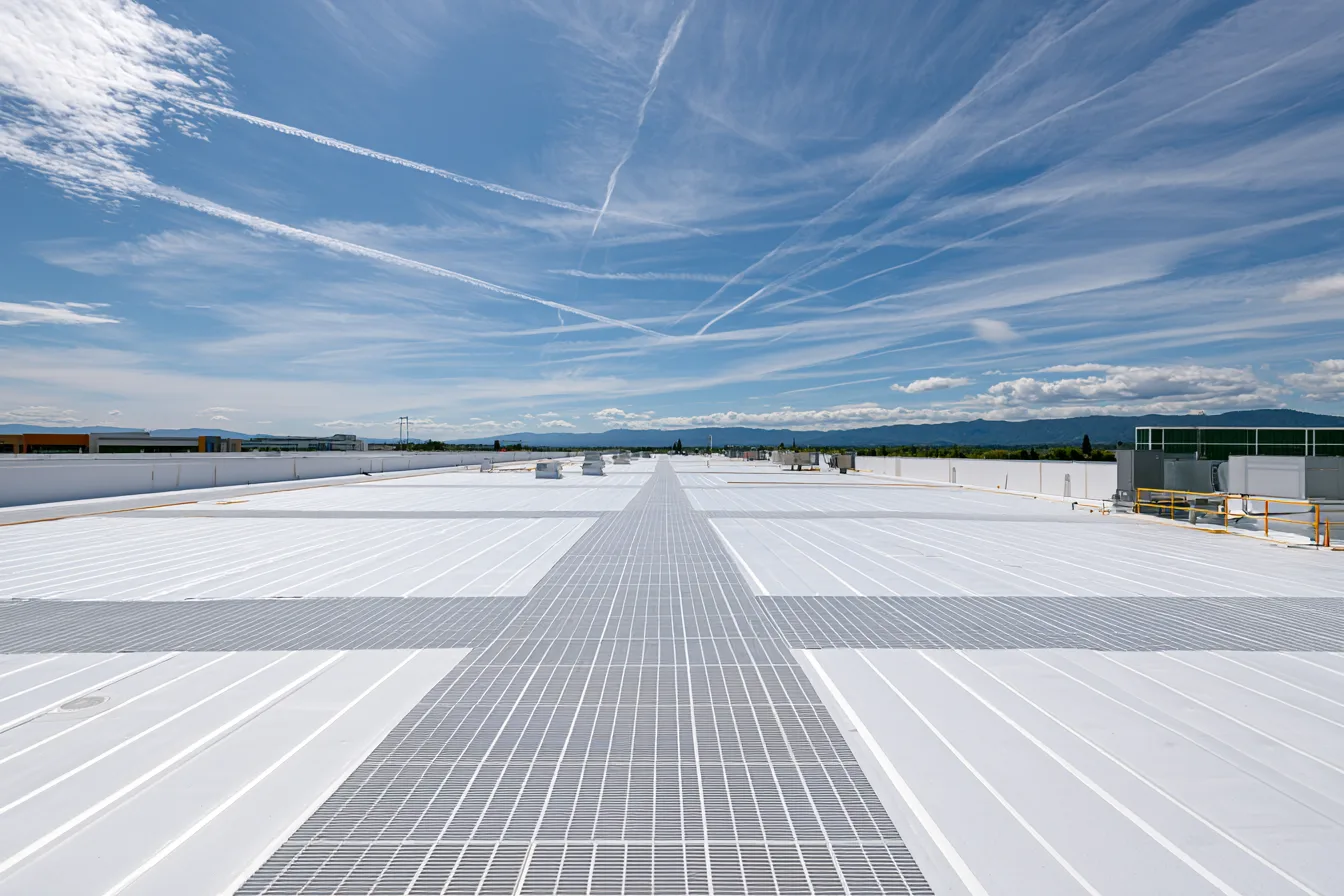
A shallow roof still needs drainage
Low-slope roofs need a way for rain to reach a drain, gutter or scupper, which is an opening through the parapet. The slope may be in the structure or in tapered insulation. A depression, a blocked outlet or an altered equipment detail can interrupt that route.
The inspection needs to distinguish a temporary drainage obstruction from a roof shape that repeatedly holds water. A broad stain on the surface can show where water has sat, but it does not reveal the moisture condition of the layers below.
A recurring leak belongs with flat roof repair and drainage assessment so the opening and the retained water are considered together.
The drain and the roof surface work together
A clear drain can still sit above a nearby low point. A roof with the right slope can still fail to drain when debris blocks the outlet. Those are different causes with different remedies, and a surface patch alone does not distinguish them.
Equipment service routes matter too. Repeated traffic can damage a membrane, while equipment or pipe work can change the places water has to pass. Keeping the building’s maintenance activity in the roof conversation helps explain why a leak returns.
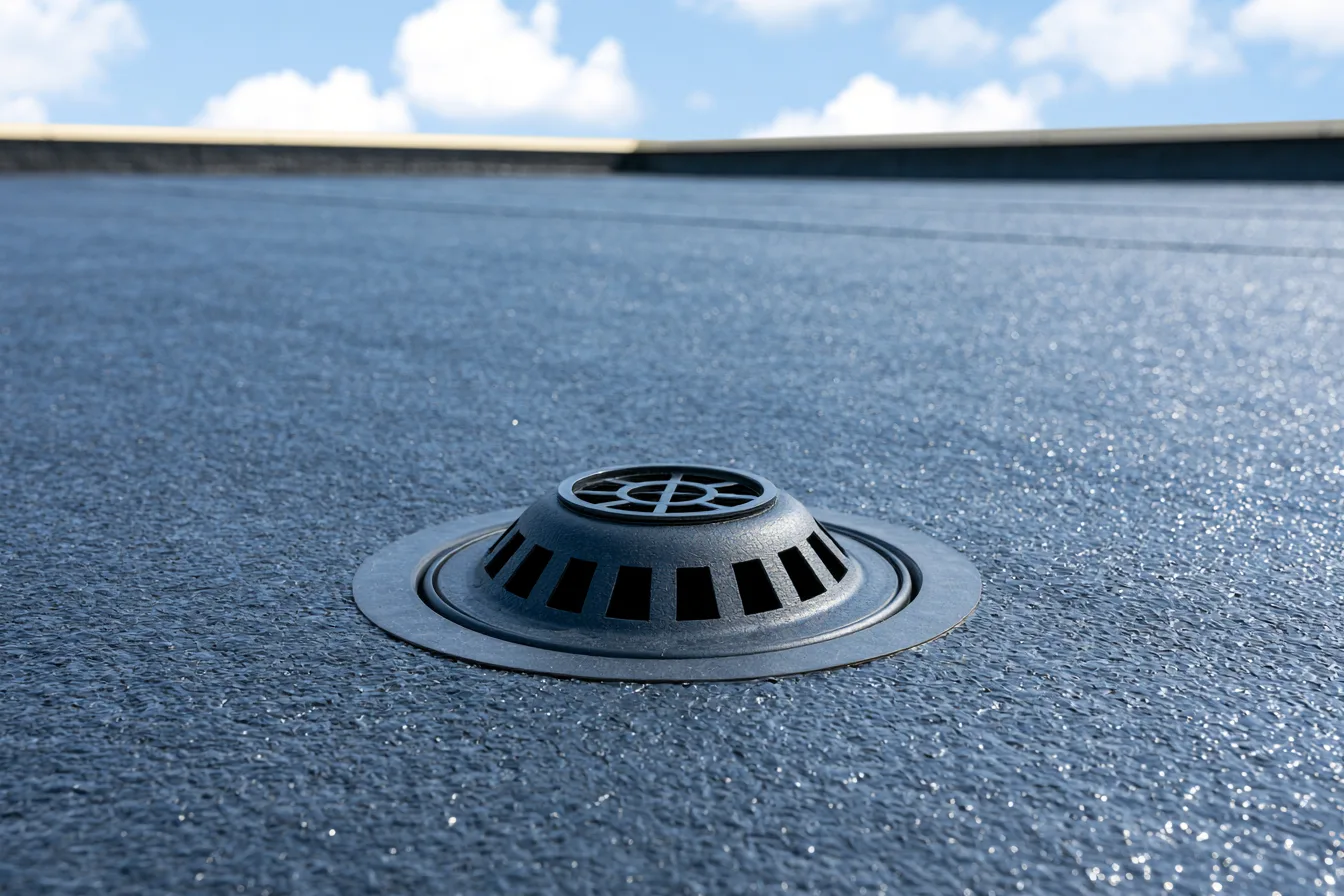
A coating does not create a drainage slope
A compatible roof coating can protect a suitable prepared roof, but it does not create a drainage slope. Wet insulation or deteriorated support also needs attention before a new finish covers the surface.
A building owner should not have to choose between “another patch” and “replace everything” from a photograph of a puddle. The useful answer identifies the drainage cause, the material condition and the repair boundary. Share where leaks appear inside and the operations affected; the assessment can begin there.
Put a recurring roof leak in context
A recurring leak and standing water need one coherent roof assessment.
Deep Fork Roofing